Hi The photo below was taken on a cold, dark night in June, 2012 while I was working with Walpiri rangers in the Tanami Desert. The traditional name of this place is Nyukulka or Wilson Creek Flood-out. I prefer Nyukulka. (Pronounced: Nyu-kul-ka). Later I will share why I was at Nyukulka however firstly I would like to shared a little about this photo and what it means to me. The trees are Ghost Gums, Common in Central Australia, To cope with the harsh summers, They produce a white powder on their trunks and branches, An amazing natural heat control system. My camera flash really highlighted these white trunks and branches, I sometimes call this photo, 'Ghosts in the Tanami', Ghostly figures appearing out of the dark, a silent and cold desert night, Far from being spooky, there was is profound beauty, Far from being remote and disconnected, there was a personal message. The dark desert night background reminds me of life, At times, harsh, lonely and dark, Remote, unforgiving ...
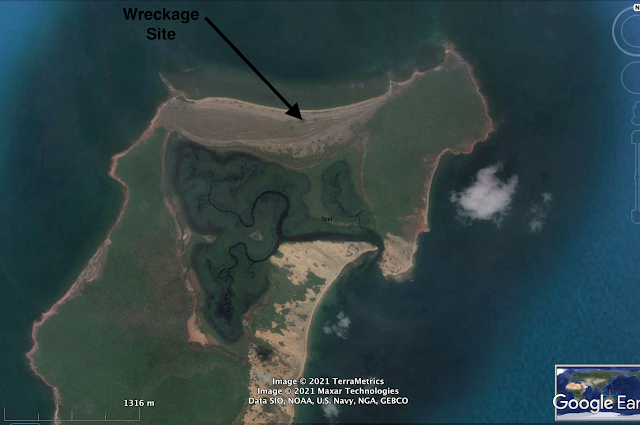
Last November you may recall I managed to locate the wreckage of a WW2 bomber with my drone See the blog I posted on 6 November titled - USAF - B24 WRECKAGE - FOIL PROOF MARY. I managed to visit the site on the ground with some Garngi rangers recently. There are no vehicle tracks to this area of Croker Island which means boat access is the only possible way of getting to the area on the ground. By way of reminder, the arrow points to the wreckage site at Cape Croker on the northern end of Croker Island. The 1943 crash site was clear of trees. Sadly, four crew died as a result of this crash landing and subsequent fire. The photo shows evidence of a fire around the inner parts of the wings and adjacent fuselage. The No 2 prop (inner left) broke off during the final part of the landing roll when they hit a small ditch. The No 1 (outer left) engine shows a dark mark on the wing behind the engine. This must have been one of the two engines that had failed due to anti aircraft fir...
Hello from Croker Island Earlier this week we had a significant rain event here measuring 185 mm over a 24 hour period. We had an anthropologist here from Darwin to do some registering work on sacred sites around the island. The rain impacted some of our plans earlier in the week however on Thursday the weather had improved, allowing us the get out. The visibility was amazing! But first, a short explanation of what a sacred site is. There are many different types of sacred sites from burial sites, to clan boundary markers to restricted areas like a no fishing marine park. Additionally, as Indigenous people were and still are to a large extent an oral culture, stories are passed on from generation to generation about people, land and marine animals and birds travelling through the land. Many of the locations in these stories are also sacred sites. These stories were told to children at night as they prepared for sleep. Most of these stories also have deeper layers of meaning which can i...



Comments